Trulli of Puglia: Dry-Stone Architecture Built to Last
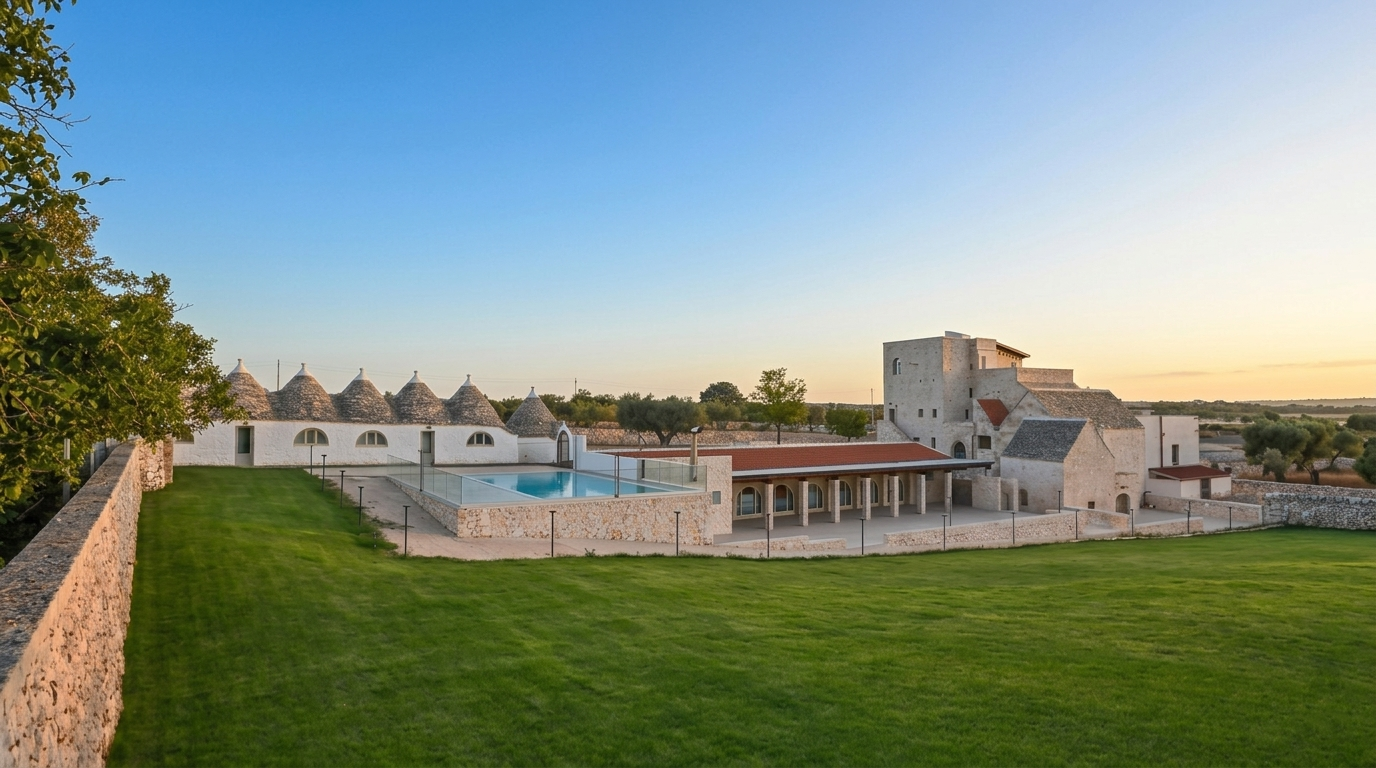
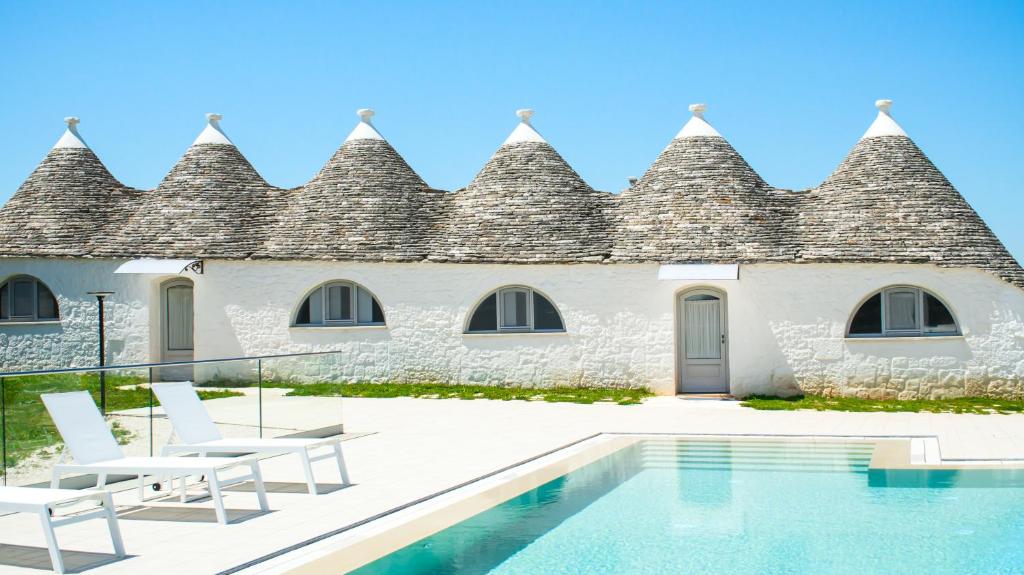
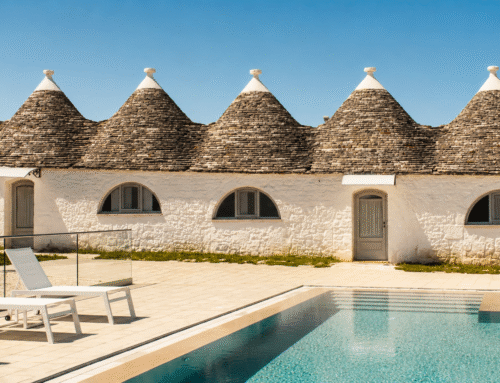
No image is more recognizable of Puglia than a trullo. The conical roof, the whitewashed walls, the stone pinnacles rising among the olive trees: an architecture that looks like it stepped out of a fairy tale, but was actually born from a very concrete problem — how to build shelter that was solid, quick to raise, and nearly free, using only what the land provided.
Trulli aren’t an aesthetic flourish. They’re the answer generations of farmers gave to a demanding landscape, and to soil that had to be cleared of stone before it could even be farmed.
Stones that came out of the ground before they became walls
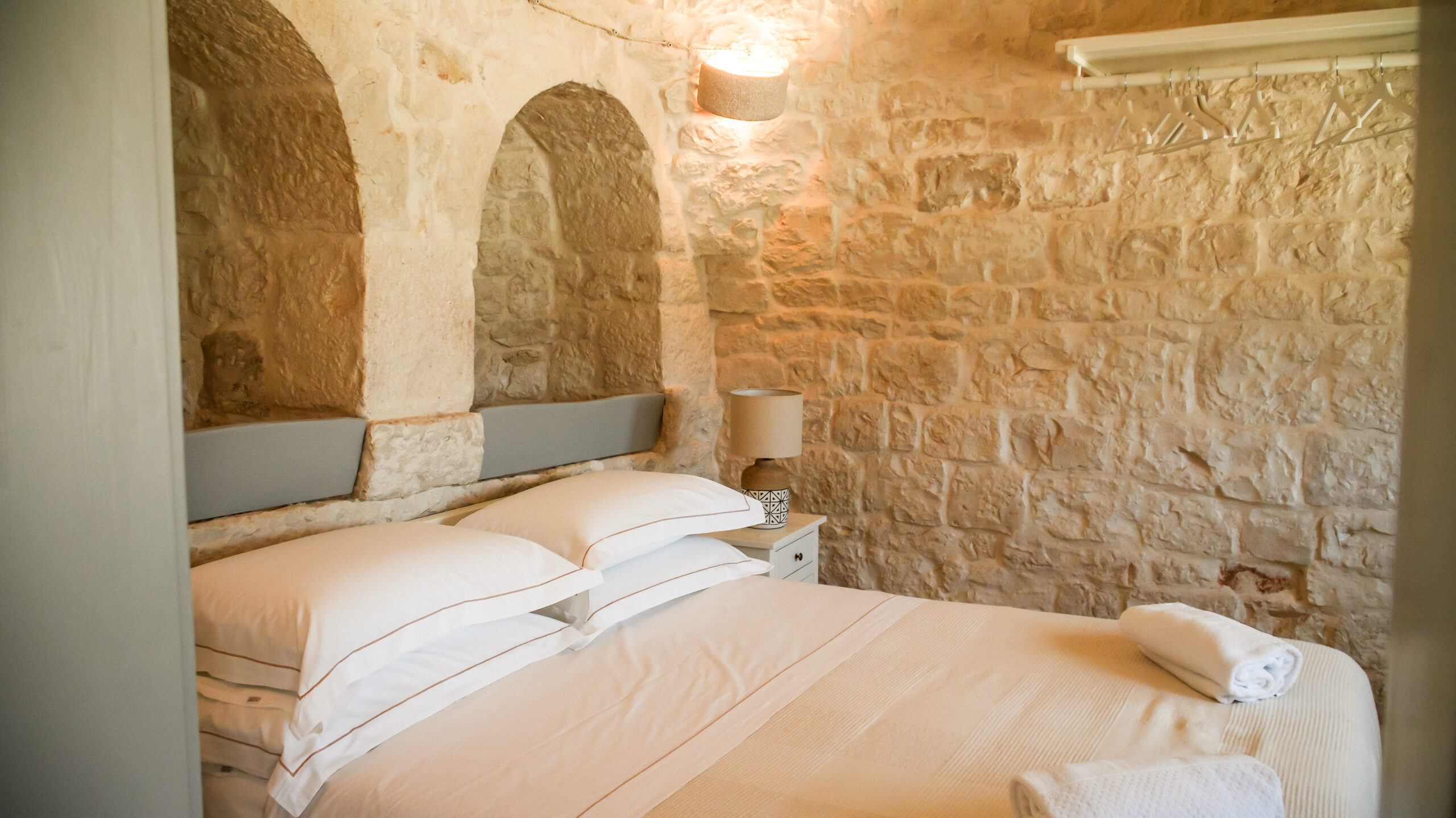
Much of the Valle d’Itria and the Murgia plateau sits on limestone bedrock that surfaces or lies just beneath the topsoil. Before a field could be plowed, farmers had to clear it — a process known locally as spietramento, or “de-stoning.” The stones pulled from the ground were piled into small mounds called specchie, then almost entirely reused: the more irregular ones became the dry-stone walls that still crisscross the countryside today, while the more workable ones were used to build the trulli themselves.
That’s why trulli look slightly different from area to area — the shape of the stone available locally, sometimes squarer, sometimes more rounded, shaped the building technique too. A trullo isn’t a design applied to the land. It’s the land itself, rearranged into shelter.
The conical roof: a dome that holds itself up
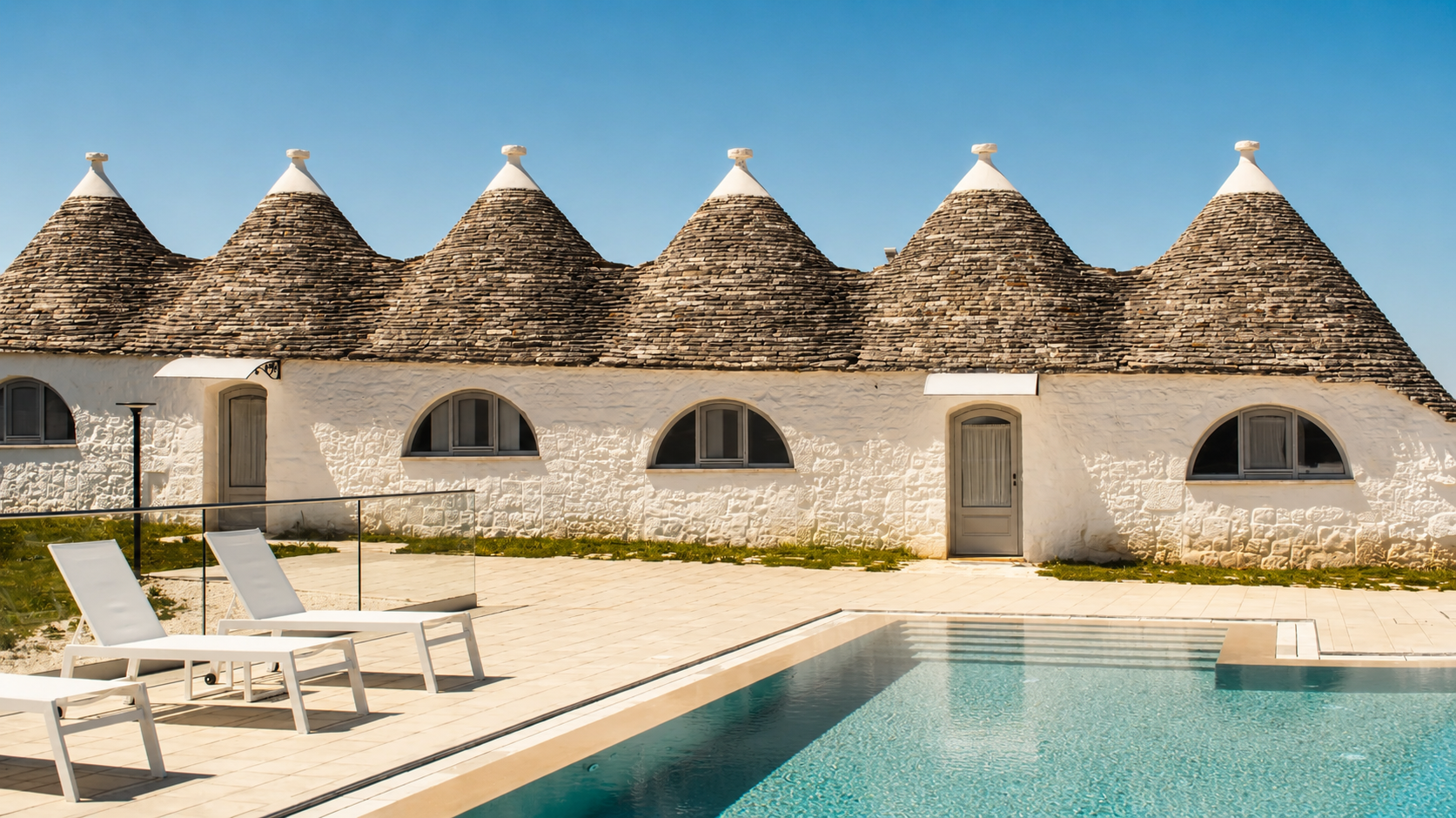
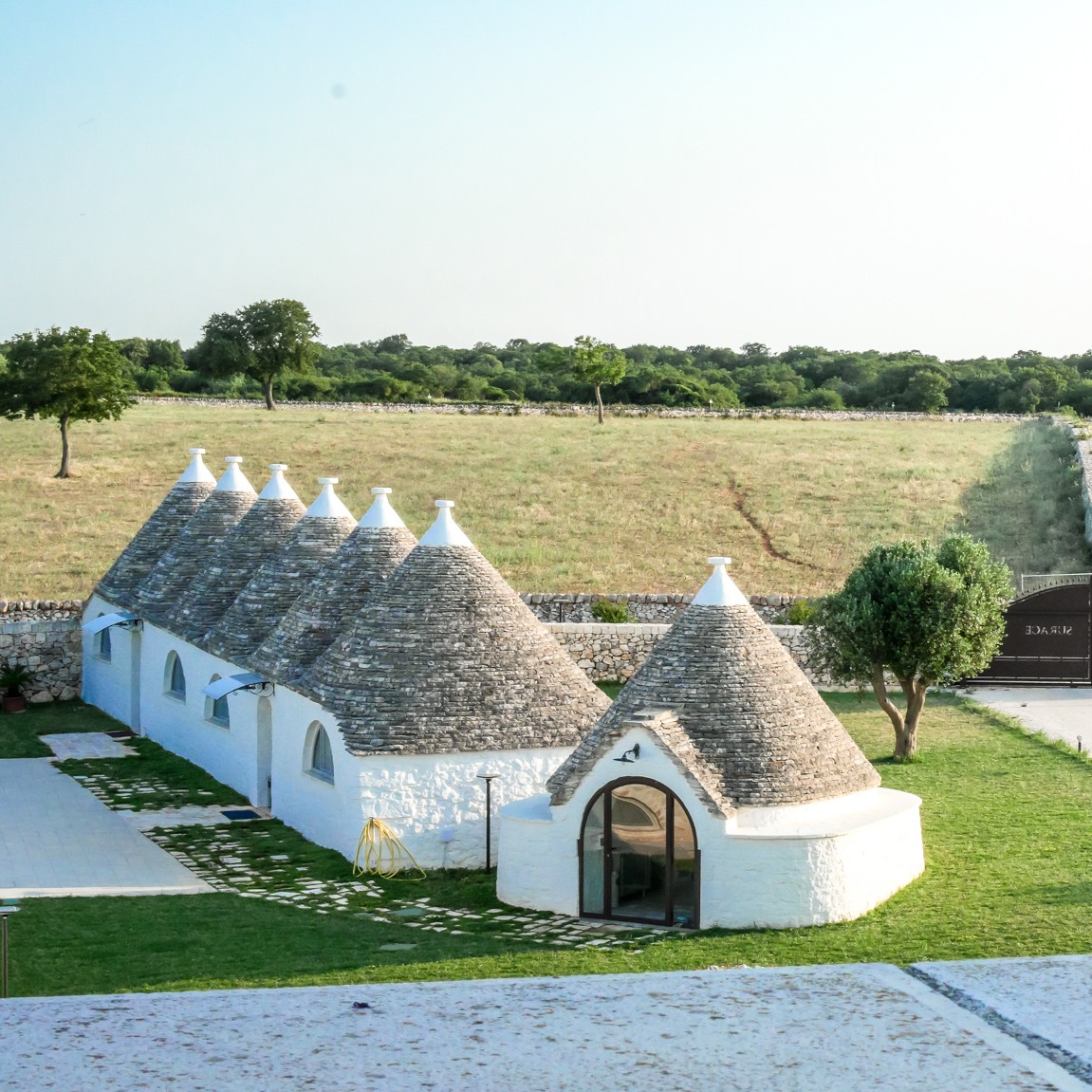
The trullo‘s most iconic feature is its conical roof, sometimes called a pseudo-dome. Here too, there’s no mortar and no temporary support structure: the stones are laid in concentric rings, each one narrower than the last, resting on top of one another until they close at a single point overhead. The trick is gravity — each stone transfers its weight to the one beneath it, and the whole structure holds itself up through pure structural logic, without pushing outward the way a classical dome would.
The outer covering is made of chianche, thin slabs of limestone just a few centimeters thick, also laid in overlapping rings and tilted slightly outward — just enough to let rainwater run off instead of seeping in. At the very top, the pinnacle — sometimes a sphere, a pyramid, or a simple cone — closed the structure symbolically; local tradition assigns many of these shapes protective or good-luck meanings, alongside the white symbols often painted in lime on the roofs, drawn from religious or folk imagery.
Built to be fast, not necessarily built to last
There’s a chapter in the trulli’s history that makes them even more distinctive, tied to how settlements were taxed under the Kingdom of Naples. According to local tradition, the feudal lords around Alberobello encouraged farmers to build in dry stone specifically because these houses could be dismantled quickly if tax inspectors came around: remove the closing stone at the top of the cone, and the structure could be brought down in short order, then rebuilt later. It’s a story passed down more than it’s been fully documented, but it captures the spirit behind this architecture well — resourceful, practical, never built to impress.
And yet these structures, designed to be temporary, have survived for centuries. Many of the trulli still standing today date back to the 1500s and 1600s, some possibly earlier, though the dry-stone technique makes exact dating difficult — the stones of an old trullo and one rebuilt several times over are, quite simply, the same stones.
An architecture that today we’d call sustainable
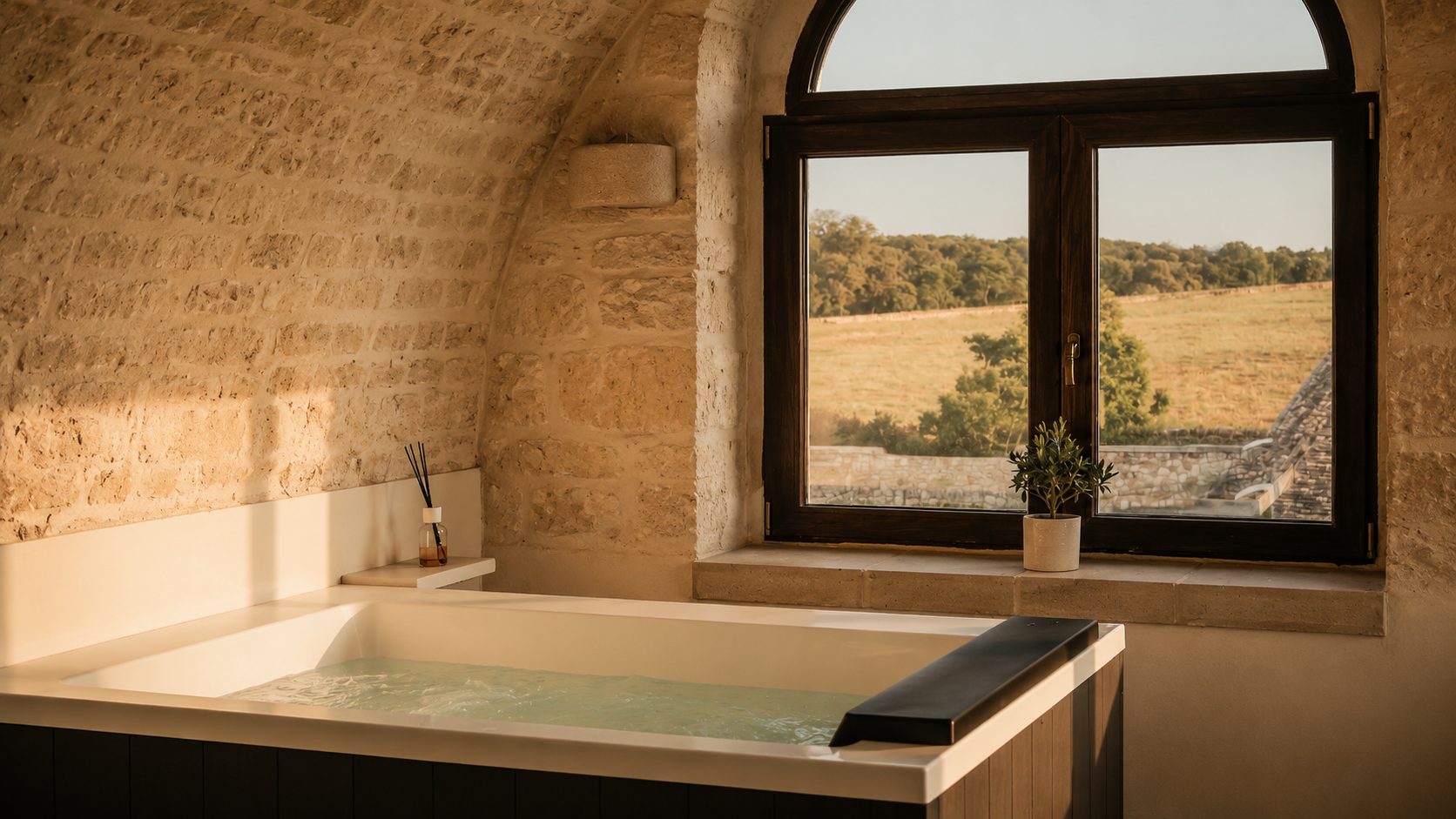
Natural ventilation, zero-mile materials, passive thermal insulation, a building process with no waste in its supply chain: all of this would today fall under the principles of bioclimatic architecture. Trulli practiced it without ever needing to theorize it, simply because any alternative would have cost more — in time and effort — for the people who had to build them with their own hands.
That may be exactly why trulli still fascinate visitors today, well beyond their picturesque appearance. They don’t just tell the story of a region. They tell a building logic that, in its simplicity, anticipated by centuries what contemporary architecture is still trying to relearn.
Want to experience staying in an authentic trullo or masseria in Puglia? Visit our website or write to us at info@masseriasurace.it

 +39 334 874 0128
 info@masseriasurace.it